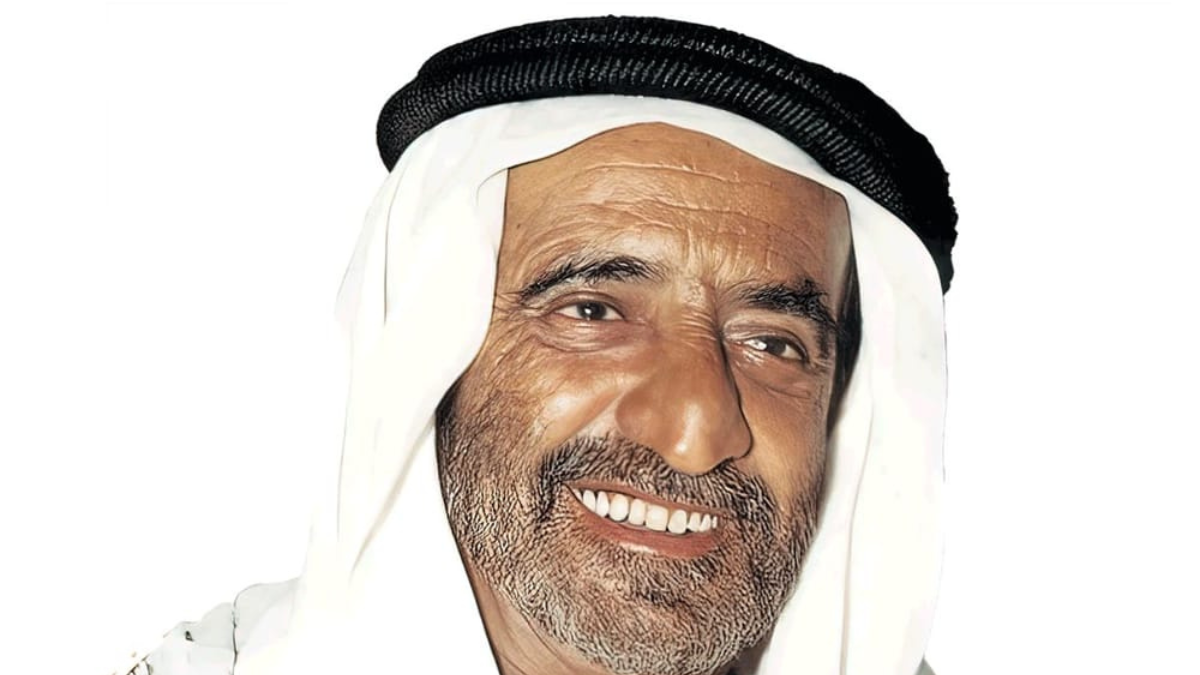
Sheikh Rashid bin Saeed Al Maktoum, Thirty-five years have passed since the UAE bid farewell to one of its most visionary sons, the man whose foresight transformed Dubai from a modest trading port into one of the world’s most admired global cities. His passing on October 7, 1990 marked not just the end of an era but the beginning of a living legacy one that continues to shape the skyline, the economy, and the soul of Dubai today.
Born in 1912 in the historic Al Shindagha district, Sheikh Rashid belonged to the illustrious Al Maktoum family, whose leadership of Dubai dates back to 1833. From his earliest years, he absorbed the lessons of resilience, diplomacy, and vision from his father, Sheikh Saeed bin Maktoum, then the Ruler of Dubai. Those formative experiences set against the backdrop of a pearl-based economy, harsh desert life, and limited infrastructure sharpened his understanding of what it truly meant to lead a people toward progress.
When Sheikh Rashid assumed power in 1958, Dubai was a small coastal settlement with unpaved roads, a congested creek, and little access to modern utilities. Yet, as documented by The National UAE and Dubai Media Office, he saw not what the city was, but what it could become. His vision was grounded in realism but driven by faith in his people, in planning, and in Dubai’s position as a natural bridge between East and West.
Under his leadership, the emirate’s transformation began with projects that seemed almost impossible at the time: the dredging of Dubai Creek, the construction of the first modern airport (1960), and the launch of Port Rashid (1972). These were not mere developments; they were declarations of intent. Sheikh Rashid understood that building infrastructure was not about cement and steel it was about enabling opportunity.
Today, as Dubai stands as a symbol of progress and innovation, every road, bridge, and skyline bears his imprint. According to Gulf News archives, even decades after his passing, residents and historians still refer to him as “the architect of Dubai’s renaissance.” His leadership was defined by quiet strength, visionary simplicity, and a relentless belief that prosperity begins with people not wealth.
As the UAE commemorates the 35th anniversary of his passing, Sheikh Rashid’s story is not merely remembered; it is lived. Dubai itself stands as his biography a city that embodies the dream of a leader who built not only towers and ports but a legacy of hope, unity, and human progress.
Roots & Beginnings — When the Sands Whispered a Name
Before he became the architect of Dubai’s renaissance, he was a young boy who walked along the shimmering banks of Dubai Creek, watching dhows drift toward the horizon. Sheikh Rashid bin Saeed Al Maktoum, born in 1912, was not just a prince destined for power he was a listener, a learner, and a dreamer shaped by the rhythm of a desert city that seemed to breathe through trade and tide.
The Son of Heritage — The Al Maktoum Lineage
He was born into the noble Al Maktoum family, rulers of Dubai since 1833 a lineage marked by resilience and unity. His father, Sheikh Saeed bin Maktoum, ruled during an era defined by the ebb and flow of the pearling trade, droughts, and economic uncertainty. The young Rashid, often seen beside his father in the majlis (council), grew up witnessing the essence of leadership one rooted in patience, humility, and service.
According to the UAE National Archives and Encyclopaedia Britannica, Sheikh Rashid received traditional education in Quranic studies, Arabic, and governance, guided by scholars who instilled not only knowledge but ethics. It was during these years that he began to see leadership as a responsibility to the people rather than a privilege of birth.
A Desert Childhood — Lessons from Simplicity
Dubai in the 1920s was modest narrow alleys, coral-stone homes, and bustling souks filled with traders from India, Persia, and East Africa. The city had no oil, no skyscrapers, and no electricity grid. Yet even in that simplicity, young Rashid observed the pulse of global commerce. He understood that Dubai’s true wealth was not underground but at its heart in its people and its position.
He often accompanied his father to Creek-side negotiations, listening as merchants discussed tides, trade, and taxes. Each conversation became a lesson in diplomacy and pragmatism. As chronicled by Gulf News Heritage Series, Rashid’s early exposure to trade dynamics and his natural curiosity made him “a leader who learned to read people before he read ledgers.”
The Vision Takes Root
By his twenties, Sheikh Rashid had developed a clear sense of direction. He envisioned a Dubai that would transcend its geography a city that would thrive on connectivity, openness, and foresight. Those early insights, born from scarcity and observation, would later blossom into policies that defined modern urban governance in the Middle East.
He was not yet the ruler, but destiny had already whispered his name through the winds of the Arabian Gulf a name that would one day become synonymous with transformation, foresight, and enduring leadership.
The Man Who Built Dubai — The Rise to Rulership (1958)
In the late 1950s, the desert wind carried both silence and promise. The world beyond the Arabian Gulf was awakening to a new era of oil, trade, and technology yet Dubai remained a humble port city, its ambitions confined by the narrow stretch of the Dubai Creek. It was in this moment of uncertainty that destiny called upon Sheikh Rashid bin Saeed Al Maktoum, then forty six years old, to lead his people into the future.
When Leadership Found Its Time
Upon the passing of his father, Sheikh Saeed bin Maktoum, in 1958, Rashid ascended to the throne as the Ruler of Dubai. What he inherited was not wealth but faith, a faith entrusted to him by a people who believed in his steady vision. Dubai was burdened by limited infrastructure, poor sanitation, and frequent flooding. Yet as noted in The National UAE’s historical retrospectives, Sheikh Rashid’s first act as ruler was not to lament what was lacking, but to imagine what was possible.
He walked through the city personally, observing each neighborhood, each sand-strewn road. He listened more than he spoke, often gathering merchants, traders, and residents to hear their ideas. This consultative approach “shura” became the hallmark of his governance. He believed that leadership was a covenant, not a command.
The Creek That Changed a Nation
At the time, the Dubai Creek the city’s lifeline had begun silting, choking trade and threatening livelihoods. Many foreign advisors dismissed the idea of dredging it as impractical and financially reckless. But Sheikh Rashid saw further than most. As recorded by the Dubai Media Office and the British Archives of the Gulf, he declared:
“If we build the Creek, the Creek will build Dubai.”
With limited funds, he introduced a bold public-private partnership, inviting Dubai’s merchants to invest in the dredging project. The result was transformative. Ships of greater tonnage could now dock at Dubai’s shores, reviving commerce and setting the foundation for Dubai’s future as a regional trading hub.
By the early 1960s, that single decision had sparked a chain of development new bridges, warehouses, and customs offices rose along the Creek. Gulf News called it “the project that changed the fate of Dubai.”
Faith in the Future
Sheikh Rashid’s early years in power were marked by restraint and vision an uncanny balance between practicality and imagination. He often said that a ruler must see fifty years ahead, even when the horizon seems empty. That philosophy defined every step he took thereafter from the expansion of ports to the blueprint for an international airport.
In a world that measured progress in barrels of oil, Sheikh Rashid measured it in connectivity, confidence, and courage. By the dawn of the 1960s, the foundations of modern Dubai were laid not in marble, but in the belief of a ruler who built bridges before towers and people before profit.
Infrastructure & Connectivity — The Backbone of a Metropolis
It began with a dream and a map drawn in sand.
To most, the windswept dunes of 1960s Dubai were a symbol of isolation but to Sheikh Rashid bin Saeed Al Maktoum, they were a canvas. He knew that no city could rise without veins, and those veins would be its roads, bridges, ports, and airports channels through which life, trade, and hope would flow.
When the Sky Opened — Dubai International Airport (1960)
In September 1960, a moment unfolded that would forever alter Dubai’s destiny. The emirate inaugurated its first modern airport a single sand runway and a small terminal that, to the untrained eye, looked humble. But Sheikh Rashid saw something grander: a portal to the world.
As chronicled in Dubai Media Office’s historical archive, his decision to build Dubai International Airport came at a time when skeptics questioned its necessity. Oil had not yet been discovered in commercial quantities, and resources were limited. Yet Sheikh Rashid believed that connectivity, not oil, would secure Dubai’s future. Within a decade, the airport was serving international carriers and standing as the beating heart of a city that would one day become the world’s busiest for international passengers.
He told his advisors, “If Dubai is open to the world, the world will come to Dubai.” a prophecy fulfilled decades later, as the airport became a symbol of both ambition and accessibility.
Bridging the City — From Shores to Skyline
The Al Maktoum Bridge, inaugurated in 1963, was another masterstroke. Before its construction, crossing the Creek meant waiting for abras that ferried people and goods between Deira and Bur Dubai. With the bridge’s opening, for the first time in history, Dubai’s two halves were united by a physical link a gesture that mirrored Sheikh Rashid’s deeper philosophy of unity, progress, and human connection.
The bridge not only eased movement but also spurred economic activity on both sides of the Creek. As documented by Gulf News Heritage, the project paid for itself through tolls within just two years a testament to his strategic thinking and fiscal foresight.
Later came the Shindagha Tunnel (1975), the Dubai-Abu Dhabi Road
and a network of arterial routes that turned a coastal settlement into an emerging metropolis. Roads became symbols of reach, and every stretch of asphalt carried the pulse of a city growing with confidence.
Ports of Prosperity — From Creek to Coast
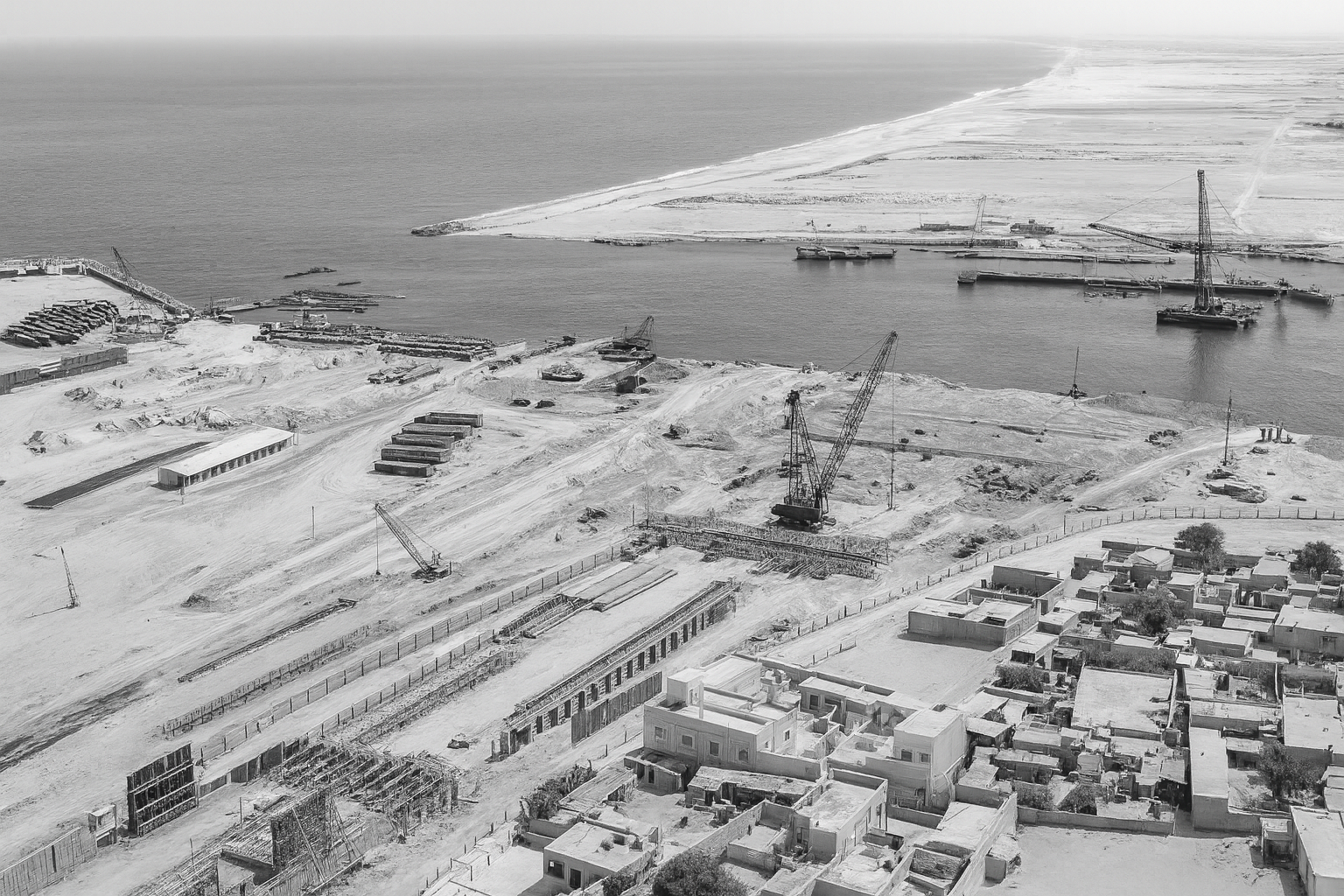
Sheikh Rashid’s maritime vision culminated in the creation of Port Rashid, inaugurated in October 1972. Built with modern container-handling facilities, it was the first of its kind in the region. The National Archives describe it as “a gateway that transformed Dubai’s relationship with the seas.”
Ships now arrived from Europe, India, and the Far East no longer bypassing Dubai, but anchoring to its promise. And when trade outgrew Port Rashid, Sheikh Rashid’s foresight had already envisioned the next step: Jebel Ali Port, which began construction under his direction in the late 1970s and became operational in 1979 the world’s largest man-made harbor at the time.
The Blueprint of a Visionary
Each road, bridge, and port built under Sheikh Rashid’s leadership was more than an engineering feat it was a statement of intent. He was, as The National UAE described, “the ruler who saw infrastructure as destiny.”
In less than two decades, Dubai had transformed from a quiet coastal town into a rising commercial capital a city not waiting for the world to discover it, but building the world it wished to become.
Diversification & Global Outlook — The Vision Beyond Oil
When oil was discovered in Dubai in 1966, jubilation filled the air. To many, it symbolized the arrival of effortless prosperity a river of wealth that could change everything overnight.
But Sheikh Rashid bin Saeed Al Maktoum looked at the discovery not as an end, but as a beginning. He famously remarked, as recalled by The National UAE,
“Oil will not last forever. But men, vision, and work will.”
The Merchant of Vision
While other cities dreamt of oil refineries, Sheikh Rashid dreamt of trade routes. He knew the true fortune of Dubai lay not beneath its sands but along its horizons. Guided by a deep understanding of global commerce shaped from his youth observing traders at Dubai Creek he set out to transform the emirate into a hub of opportunity.
He encouraged merchants to expand, reduced customs fees, and established transparent trade policies that drew investors from across Asia and the Middle East.
As documented by Gulf News Heritage Archives, Sheikh Rashid often walked among traders in the souks, listening to their grievances firsthand. His approach was pragmatic: “Make Dubai easy for business, and business will make Dubai great.”
Ports, Free Zones, and the Dream of a Borderless Economy
After the success of Port Rashid (1972), the next grand move was Jebel Ali Port envisioned as a colossal maritime gateway that could handle global-scale trade. Its inauguration in 1979 stunned economists; it was the largest man-made harbor in the world, surrounded by empty desert. But Sheikh Rashid saw that desert differently as potential waiting for purpose.
By the early 1980s, that vision evolved into the Jebel Ali Free Zone, a revolutionary concept in the Middle East that allowed foreign companies to operate with full ownership and minimal restrictions.
According to Dubai Media Office’s development timeline, these two projects alone created a ripple that defined Dubai’s global economic identity, attracting hundreds of international firms and cementing the emirate’s role as the logistics heart of the Gulf.
The Birth of the Skies — Emirates Airline
As Dubai’s ports anchored trade on sea, Sheikh Rashid turned his eyes skyward. In 1985, under his leadership, Dubai launched Emirates Airline with just two leased aircraft.
The move was visionary: to make Dubai a crossroads between continents.
In an era when few believed a Gulf carrier could compete globally, Emirates became a symbol of national pride a flying embodiment of Sheikh Rashid’s conviction that connectivity was destiny.
As The National UAE notes, Emirates’ founding wasn’t merely about transport; it was about branding Dubai as a world-class city before the term “global hub” even existed.
The Philosophy of Progress
Unlike many rulers of his time, Sheikh Rashid viewed wealth as a tool, not a treasure. He reinvested oil revenues into infrastructure, education, healthcare, and trade diversification, ensuring that prosperity flowed back to the people.
His mantra quiet yet powerful echoed through every decision: “Build the base before the skyline.”
By the late 1980s, while others relied on oil, Dubai had built a self-sustaining economy of commerce, ports, tourism, and aviation. It stood resilient, prepared for the century ahead an outcome few could have predicted, yet one Sheikh Rashid had envisioned decades earlier.
As Britannica observes, he was among the first Middle Eastern leaders to fully grasp the concept of sustainable diversification, long before it became a global economic doctrine.
He did not chase the wealth of oil he planted the wealth of ideas.
The Human Approach — People Before Projects
In a century defined by towers and trade, Sheikh Rashid bin Saeed Al Maktoum stood apart a ruler who believed that a city’s greatness is measured not by its buildings, but by its people.
While he built ports, roads, and bridges, his truest foundation was human education, healthcare, dignity, and compassion. He understood that before a skyline could rise, its people had to stand tall first.
The Leader Among His People
Sheikh Rashid was a ruler who walked the streets of his city.
Elders across the emirate still recall how he would appear without entourage — visiting markets, schools, and construction sites, speaking to citizens, merchants, and workers with the same humility. As recorded by Gulf News Heritage and Dubai Media Office, he often met people face-to-face to listen to their concerns rather than rely on reports or intermediaries.
This accessibility was not political theatre; it was his nature. He embodied the Bedouin principle that “a leader eats last, listens first.”
He made every resident Emirati and expatriate alike feel seen, heard, and valued.
The National UAE described him as “the ruler who governed from the heart before the palace.” His leadership had no barriers of class or status only shared purpose.
Building the Human City
Even during the early years of limited resources, Sheikh Rashid prioritized education and healthcare as the twin pillars of progress.
He oversaw the establishment of Rashid Hospital (1973) and Al Maktoum Hospital, ensuring that healthcare would be accessible to all residents free for those in need. Schools expanded across the emirate, and scholarships were granted to young Emiratis to study abroad in Cairo, London, and Beirut.
He was also among the first Gulf leaders to encourage women’s education, believing that “when you educate a woman, you build a nation.”
As noted by Khaleej Times Heritage Archives, his inclusive view of human development laid the groundwork for Dubai’s cosmopolitan ethos decades before globalization became a word.
Governance with Grace
Sheikh Rashid’s daily majlis sessions were legendary. Traders, teachers, and tribesmen gathered to share grievances or ideas. His responses were calm, deliberate, and compassionate blending wisdom with wit. Many accounts describe how he preferred modest dress, simple meals, and quiet routines. His humility was not an act; it was identity.
His focus was not on building monuments to himself but on building systems that outlived him.
He modernized Dubai’s municipal governance, introduced public service departments, and supported the creation of Dubai Municipality (1954) as a formal institution of urban management one of the first in the region.
A Legacy of Humanity
To Sheikh Rashid, development without dignity was meaningless. His leadership created an environment where citizens believed in the government because the government believed in them.
As The National Archives of the UAE documents, he once said,
“Our people are our future. If we build them, they will build everything else.”
Today, as skyscrapers mirror the desert sun and Dubai’s population surpasses 3.5 million, it is easy to see the physical marvels. But beneath that skyline lies the invisible architecture of compassion the human-first philosophy of Sheikh Rashid bin Saeed Al Maktoum, who taught his city that hearts must rise before towers.
Union & Nationhood — The Founding Father’s Handshake
History often remembers moments of war, but the Gulf remembers a handshake a moment of unity born not from conquest, but from conviction.
In the late 1960s, when the winds of change swept through the Arabian Peninsula, one leader saw beyond borders, tribes, and trade routes.
That man was Sheikh Rashid bin Saeed Al Maktoum, the Ruler of Dubai, a visionary whose heart beat not just for his emirate, but for an entire nation waiting to be born.
A Meeting in the Sands
The story began in 1968, when Britain announced its withdrawal from the Gulf. The news reverberated through the region like an echo of uncertainty. The Trucial States small, scattered, and economically fragile faced an unknown future. But Sheikh Rashid saw an opportunity where others saw risk.
As recorded by the UAE National Archives and The National UAE, Sheikh Rashid traveled to Abu Dhabi to meet his friend and counterpart, Sheikh Zayed bin Sultan Al Nahyan.
What followed was one of the most symbolic meetings in Arab history two leaders sitting on the sands near Argoub El Sedira, discussing a dream that seemed impossible: the unification of the emirates.
They shared no written agreement that day, only mutual trust. Sheikh Rashid told Sheikh Zayed:
“Together, we can build what alone we cannot.”
It was a statement of profound simplicity one that would shape the destiny of millions.
The Road to Union
Over the next three years, Sheikh Rashid played a pivotal role in shaping what would become the United Arab Emirates (UAE). He opened Dubai’s resources, experience, and infrastructure to support the federation.
According to Gulf News Heritage, he hosted early federal meetings in Dubai, providing neutral ground for dialogue among rulers of the smaller emirates. His diplomacy was quiet but persuasive balancing tradition with pragmatism, sovereignty with unity.
When the UAE was formally established on December 2, 1971, Sheikh Rashid stood beside Sheikh Zayed at the founding ceremony, his eyes reflecting both pride and purpose.
Dubai became the federation’s commercial heart, while Abu Dhabi assumed the political capital a harmony that endures to this day, shaped by the mutual respect between two visionaries.
The Dubai Media Office describes Sheikh Rashid as “the architect of cooperation” the bridge-builder who ensured that federation did not dilute identity but amplified it.
Beyond Borders — A Statesman’s Horizon
Sheikh Rashid’s diplomatic acumen extended beyond the UAE. He strengthened Dubai’s relations with Arab, Islamic, and international nations, welcoming trade delegations, and supporting pan-Arab initiatives.
Under his leadership, Dubai became an example of coexistence, a model of what modern Arab governance could look like: stable, open, and forward-looking.
His partnership with Sheikh Zayed became a symbol of brotherhood that transcended politics. As The National UAE beautifully phrased it,
“One led with generosity, the other with strategy, together they built a nation from unity of heart.”
The Spirit of Union
When the seven emirates raised the flag of unity in 1971, it was more than a political act; it was the manifestation of Sheikh Rashid’s lifelong belief that progress is shared, or it is not progress at all.
He did not seek titles or personal glory; he sought continuity. His role as Vice President and Prime Minister of the UAE (1979–1990) further exemplified his commitment to national progress through efficiency, innovation, and faith in collective governance.
As the decades unfolded, the UAE rose on the shoulders of that unity and at its heart, the steady, thoughtful presence of Sheikh Rashid bin Saeed Al Maktoum.
He was not merely a ruler; he was a founder. Not merely a builder of cities, but a builder of nations.
Legacy Milestones — The Timeline of a Vision Etched in Time
Every city tells a story.
But Dubai tells a saga one written not in ink, but in steel, glass, and sand.
Between 1958 and 1990, Sheikh Rashid bin Saeed Al Maktoum transformed a modest Gulf settlement into a blueprint for modern civilization. His life’s work was not a collection of random projects; it was an orchestrated symphony of progress each note composed with foresight, faith, and purpose.
1958–1963 — Laying the Groundwork
1958 – Sheikh Rashid ascends to leadership after the passing of his father, Sheikh Saeed bin Maktoum.
With limited funds, he begins the Dubai Creek Dredging Project, defying foreign advisors who called it “unrealistic.”
Source: The National UAE Archives
1960 – Inauguration of Dubai International Airport, then a simple runway surrounded by dunes — now one of the busiest airports on Earth.
1961 – Establishes the first Municipal and Health Department, formalizing governance and urban planning.
1963 – Al Maktoum Bridge opens, connecting Deira and Bur Dubai for the first time in history.
Source: Dubai Media Office Development Timeline
1964–1975 — Foundations of a Metropolis
1965–1968 – Rapid infrastructure growth: electricity, telecommunication, and water systems modernized; Dubai joins the Trucial States Council.
1966 – Discovery of oil — Sheikh Rashid immediately channels revenues into long-term infrastructure, education, and healthcare rather than personal wealth.
1968 – The historic meeting with Sheikh Zayed bin Sultan Al Nahyan, initiating the dream of union.
1971 – The United Arab Emirates is born. Sheikh Rashid becomes Vice President of the new nation.
Source: UAE National Archives, Gulf News Heritage Series
1972 – Inauguration of Port Rashid — a landmark in maritime trade. Its 35 berths soon made Dubai the busiest port in the region.
1973 – Opening of Rashid Hospital, establishing world-class healthcare in Dubai.
1975 – Shindagha Tunnel opens — an engineering marvel connecting communities under the Creek.
1976–1985 — The Leap Beyond Boundaries
1976 – Launch of Dubai Drydocks, boosting ship repair and industrial services.
1979 – The opening of Jebel Ali Port, the world’s largest man-made harbor, followed by the conception of the Jebel Ali Free Zone — the first of its kind in the Middle East.
Source: Dubai Media Office & Khaleej Times Archives
1980–1983 – Development of modern road networks linking Dubai to Abu Dhabi and Sharjah, enabling inter-emirate trade.
1985 – Founding of Emirates Airline, a revolutionary project that would later become one of the world’s leading carriers.
1986–1990 — The Years of Continuity
In his final years, Sheikh Rashid focused on sustainability refining governance, supporting education reforms, and ensuring Dubai’s fiscal independence.
1989 – Expansion of Port Rashid and Jebel Ali terminals; introduction of containerized shipping efficiency that attracted global trade giants.
Throughout these decades, his rule blended ambition with accountability.
Every project from hospitals to harbors, from bridges to bureaucracies was linked by one unbroken principle: to build for generations, not for the moment.
Legacy at a Glance — A Chronicle of Transformation
| Year | Milestone | Sector | Enduring Impact |
|---|---|---|---|
| 1960 | Dubai International Airport | Aviation | Global connectivity hub |
| 1963 | Al Maktoum Bridge | Infrastructure | Unified Dubai’s geography |
| 1972 | Port Rashid | Maritime Trade | Boosted Gulf shipping & exports |
| 1973 | Rashid Hospital | Healthcare | Universal access for residents |
| 1979 | Jebel Ali Port | Industry | World’s largest man-made harbor |
| 1985 | Emirates Airline | Aviation | Positioned Dubai as global hub |
The Architecture of a Legacy
As The National UAE wrote in its centennial feature:
“Every great city has a founder, but few have one whose vision outlives their era. Sheikh Rashid built not for his time, but for all time.”
His achievements were not monuments they were movements, alive in every system that governs, every road that connects, and every dream that dares to rise from Dubai’s golden horizon.
Farewell and Continuity — The Day the City Fell Silent (1990)
On the morning of October 7, 1990, the sun rose over Dubai as it always did golden, calm, unhurried. But the rhythm of the city had changed. For the first time in three decades, Dubai awoke without the presence of its guiding light.
Sheikh Rashid bin Saeed Al Maktoum, the father of modern Dubai, had returned to his Creator. He was seventy-eight years old a lifetime devoted to service, simplicity, and vision.
A Nation Mourns
News of his passing rippled across the UAE and beyond. The UAE National Archives recalls how flags were lowered, mosques overflowed with prayers, and streets fell into an uncommon quiet.
Citizens gathered in Al Shindagha his birthplace where elders wept openly, merchants closed their shops, and schoolchildren carried flowers. It wasn’t just a ruler they were mourning; it was a father, a builder, a friend.
As Gulf News Heritage wrote in its 1990 retrospective,
“Dubai did not lose a leader; it lost the man who gave it life.”
Sheikh Rashid’s funeral was attended by rulers from all emirates, foreign dignitaries, and thousands of citizens. Laid to rest at the Umm Hurair Cemetery, his resting place remains a symbol of humility modest, unadorned, befitting the man who had always lived simply despite the grandeur he created around him.
The Legacy Lives On
Leadership passed smoothly to his eldest son, Sheikh Maktoum bin Rashid Al Maktoum, ensuring the continuity of governance and the calm stability Sheikh Rashid had always cherished.
In 2006, his legacy deepened further when Sheikh Mohammed bin Rashid Al Maktoum his son and protégé became the Ruler of Dubai and Vice President and Prime Minister of the UAE.
The torch of vision passed seamlessly from father to sons, each carrying his principles forward into new eras.
As noted by The National UAE, Sheikh Mohammed often recalls his father’s leadership as his greatest education:
“My father taught me that a leader’s seat is among his people, not above them.”
Under Sheikh Mohammed’s leadership, the projects that Sheikh Rashid had once only imagined from the world’s tallest tower to the cleanest energy initiatives became living testaments to that same philosophy of foresight and faith.
The City That Never Forgot
Even today, 35 years after his passing, Dubai still speaks his name in streets, hospitals, and ports that bear his mark.
Landmarks such as Rashid Hospital, Port Rashid, and Sheikh Rashid Road are not mere dedications; they are echoes of gratitude etched into the geography of the city.
In every national celebration, in every new masterplan, the essence of Sheikh Rashid’s leadership remains visible quiet, purposeful, people-first.
Dubai Media Office aptly summarized his legacy in a commemorative feature:
“He left behind no throne of gold, only a city that became the world’s mirror of ambition.”
From Father to Future
Sheikh Rashid’s passing did not end his story it immortalized it. His ideals continue to flow through the veins of Dubai’s leadership, shaping policies, ethics, and dreams.
From the dredged Creek to the soaring skyline, every heartbeat of this city carries his rhythm.
He once said, “The future belongs to those who prepare for it today.”
And though the man has long returned to the earth, the city he built continues to rise prepared, confident, eternal.
Dubai Today — His Vision Carried Forward
Thirty-five years after Sheikh Rashid bin Saeed Al Maktoum’s passing, Dubai stands as both his masterpiece and his message.
What began as a fishing village by a narrow creek has become a global metropolis a crossroads of continents, cultures, and commerce.
The city’s skyline, glittering under the Arabian sun, is not just a symbol of ambition; it is a living continuation of his dream that a nation’s destiny is written by its people, not its resources.
From Sand to Skyline — The Continuation of a Dream
Every great civilization has an era that defines it. For Dubai, that era began under Sheikh Rashid and continues under the guidance of His Highness Sheikh Mohammed bin Rashid Al Maktoum, who often describes his father as “the architect of possibility.”
Together, father and son represent the two halves of Dubai’s story: the builder and the believer, the one who laid the foundation and the one who lifted the horizon.
According to Dubai Media Office’s 35th Anniversary Tribute, many of Dubai’s modern initiatives from Expo 2020 Dubai to the Dubai 2040 Urban Master Plan trace their conceptual DNA to Sheikh Rashid’s philosophy of “connectivity, inclusivity, and foresight.”
He once declared, “A city must always be a promise to its people.” That promise lives on in every master plan, transport network, and innovation district now rising across the emirate.
Dubai 2040 — The Echo of an Original Vision
When the Dubai 2040 Urban Master Plan was launched, it outlined a future where sustainability, community, and quality of life are at the core of urban growth principles that Sheikh Rashid himself championed six decades ago when he expanded Dubai Creek and built its first bridges.
His belief that infrastructure should serve humanity now guides projects like Dubai Metro, Dubai Creek Harbour, and Expo City Dubai all extensions of the same blueprint he began drafting in the 1960s.
As The National UAE observes, “The seeds Sheikh Rashid planted have become Dubai’s living forests of innovation.”
He built with permanence in mind; his successors continue to build with purpose in hand.
Dubai D33 — Prosperity for Generations
The Dubai Economic Agenda (D33) unveiled to double the city’s economy by 2033 resonates deeply with Sheikh Rashid’s early diversification ethos.
Just as he saw beyond oil into trade and tourism, today’s leadership sees beyond commerce into technology, sustainability, and knowledge economies.
Khaleej Times noted that Sheikh Rashid’s “model of reinvestment, self-sufficiency, and bold partnerships” remains the unspoken formula behind Dubai’s resilience during every global challenge from oil shocks to pandemics.
His dream of a self-sustaining city has matured into a self-reinventing one. The ports he built now anchor global logistics; the airport he founded now welcomes over 80 million travelers a year; the free zones he envisioned now host over 200 nationalities shaping the economy of tomorrow.
The Spirit of Rashid in Modern Dubai
Look closely at modern Dubai, and you can still see him everywhere in the symmetry of its infrastructure, the efficiency of its governance, the warmth of its civic ethos.
Dubai Media Office describes the city as “an organism that grows in harmony with its past,” and that past is indelibly written by Sheikh Rashid’s hand.
His values simplicity, service, sustainability, and strategic foresight remain at the core of every leadership decision.
From the humanitarian initiatives of the Mohammed bin Rashid Foundation to the smart city frameworks of Dubai Digital Authority, the spirit of Rashid lives on: pragmatic, people-first, visionary.
A Vision Without End
In the grand arc of history, few legacies span both memory and motion. Sheikh Rashid’s does.
He built the body of Dubai, but also its soul one that still beats with curiosity, courage, and compassion.
As The National UAE eloquently concluded:
“Dubai’s skyline rises not only on steel and glass but on the shoulders of a man who taught his city to dream awake.”
Thirty-five years on, that dream continues not as nostalgia, but as a living force shaping a future even Sheikh Rashid might once have imagined, standing by the Creek, watching ships sail toward a horizon that never ends.
Voices of Remembrance & Tribute — When a Leader Becomes a Legacy
A city remembers not through monuments, but through moments the stories whispered in majlis gatherings, the names spoken with affection long after the years have passed.
Thirty-five years after his passing, Sheikh Rashid bin Saeed Al Maktoum remains a living memory within Dubai’s collective soul. His image calm, thoughtful, dignified continues to inspire generations who never met him but walk daily through the world he built.
Echoes from the Palace — Reflections of His Sons
No tribute carries greater weight than the words of those who learned from him firsthand.
His Highness Sheikh Mohammed bin Rashid Al Maktoum, his son and the current Ruler of Dubai, once wrote in his book “My Story”:
“My father taught me that leadership is not about orders, but about example. He showed me that the ruler’s place is among his people, walking their streets, listening to their hearts.”
He described Sheikh Rashid as “a silent storm” a man of few words whose actions spoke with thunderous clarity.
Under his guidance, Sheikh Mohammed absorbed not just governance but grace the ability to dream boldly yet act humbly.
As Dubai Media Office noted in its commemorative feature, Sheikh Mohammed’s own leadership style methodical, visionary, humane is “the echo of Rashid’s rhythm carried into the 21st century.”
From the Council to the Community — The People Remember
Walk through the old souks of Deira, and you’ll still find elders who speak of Sheikh Rashid as if he were family.
Many recall how he would stop by their shops unannounced, asking, “How is your business today? What can we do better?”
A merchant once told Gulf News Heritage:
“He knew us all by name. When he passed, it felt as if the city had lost its heartbeat.”
Schoolteachers remember him visiting classrooms, sitting beside students, and reminding them that “education is the true oil of the future.”
Doctors at Rashid Hospital still recount stories of his insistence that “no patient should be turned away ever.”
These memories have no date, yet they remain timeless woven into the fabric of Dubai’s everyday life.
The Scholars and Historians Speak
Historians at The National UAE often describe Sheikh Rashid as “a transitional leader one who bridged the ancient and the modern.”
Dr. Fatma Al Sayegh, UAE historian and professor at UAE University, once reflected that “Rashid bin Saeed was a master of quiet revolution. He did not shout about progress; he built it brick by brick.”
Similarly, Khaleej Times chronicled in its anniversary editorial:
“The Dubai we see today efficient, elegant, enduring is not an accident of ambition. It is the inheritance of foresight.”
From the World — A Leader Remembered Beyond Borders
Foreign diplomats who visited Dubai during the 1970s often spoke of Sheikh Rashid’s composure and intellect.
A British trade delegate quoted in The National Archives (UK) described him as
“a man of extraordinary calm one who could negotiate with a smile and build with silence.”
From India to the United Kingdom, global leaders recognized in him something rare a ruler who balanced heritage with modernity, faith with forward vision.
The Living Legacy
In modern Dubai, remembrance is not confined to anniversaries. His name adorns hospitals, roads, schools, and foundations, but his real monument stands invisible in the orderliness of governance, the kindness of civic policy, the quiet discipline of progress.
Dubai Media Office captured it best in a 2024 reflection:
“He was the ruler who taught Dubai to think in centuries, not in seasons.”
A City That Still Speaks His Name
Every December, as the UAE celebrates National Day, his image appears beside Sheikh Zayed’s two leaders whose shared vision birthed a nation. Together, they remind the people that leadership is not power, but purpose.
And so, thirty-five years on, Dubai still carries his words in its wind, his wisdom in its will, and his dream in its direction.
The city that once looked up to him now looks up because of him.
A Vision Eternal — When a City Becomes a Legacy
There are leaders who rule for a time, and there are those who rule through time.
Sheikh Rashid bin Saeed Al Maktoum belongs to the latter his vision is not confined to memory; it moves through Dubai like a silent, steady pulse.
He began with nothing but faith and foresight.
From the narrow bends of the Creek to the endless sweep of Sheikh Zayed Road, his imprint lies in the unseen in the systems that work, the unity that endures, and the dream that refuses to end.
The Builder of Futures
He built without arrogance, planned without noise, and governed without distance.
The hospitals he opened now save lives every day; the bridges he built still carry millions home; the ports he envisioned continue to welcome the world.
His leadership turned dust into direction not through wealth, but through will.
As The National UAE wrote on his 35th death anniversary,
“Rashid bin Saeed did not just build Dubai he built the mindset that keeps it moving.”
That mindset to think beyond the moment, to act for the next century remains Dubai’s compass today. It guides every skyscraper, every innovation, every new horizon the emirate reaches for.
A Legacy Written in Light
When you stand by Dubai Creek at dusk, you can still feel his presence in the breeze that dances between the towers and the water.
That same air once carried the sails of wooden dhows now it carries the hum of airplanes and ambition.
And yet, beneath the transformation, the essence is unchanged: the city still believes, as he did, that “greatness begins in the heart of those who dare.”
As Dubai Media Office reflected in its commemorative piece,
“He left no speeches behind, only a city that speaks for him every day.”
Indeed, Dubai is his language now its skyline his handwriting, its progress his poetry.
From Desert Sands to Global Sky
From a modest port in the 1950s to a global capital of innovation in the 2020s, the arc of Dubai’s story is the echo of Sheikh Rashid’s lifetime.
He foresaw a metropolis when the world saw a mirage.
He saw an opportunity where others saw emptiness.
He built a city and in doing so, he built a symbol for humanity: that vision, when anchored in faith, can turn even sand into civilization.
An Eternal Light
Thirty-five years on, his absence still feels like presence quiet, guiding, timeless.
Dubai did not simply rise from the desert; it rose from the depth of one man’s belief that tomorrow could be built today.
As the UAE continues to write its next chapters, Sheikh Rashid’s story remains the prologue the origin of an unending narrative.
Every vision that follows is merely an echo of his first step.
He was not just the man who built Dubai.
He was the man who taught Dubai to believe.
And belief, like light, never dies.