Muhammad BinGhatti, The Visionary Who Brought Bugatti and Mercedes-Benz to the Sky
Muhammad BinGhatti, The Architect Who Reimagined Dubai’s Skyline
How a young Emirati architect transformed a family construction business into a global luxury real estate empire, rewriting the rules of property development in the process
On a morning in 2014, Muhammad BinGhatti sat in a university classroom at American University of Sharjah, his hands still bearing the faint scar from an all-nighter spent wielding an Exacto knife at 4:00 a.m. to meet a design deadline. While his classmates worried about final presentations, Muhammad was simultaneously running a real estate company that his father had founded six years earlier. The duality of his existence architecture student by day, CEO-in-training by night would soon collapse into a singular, audacious vision that would reshape not just buildings, but an entire industry.
That same year, Muhammad encountered the original designs for a new project called Binghatti Residences. The plans were conventional, reminiscent of what he would later describe as “the classical era” of Dubai’s development functional, profitable, forgettable. In that moment, standing before blueprints that represented safe choices and guaranteed returns, Muhammad made a decision that his father, Dr. Hussain BinGhatti Aljbori, had not anticipated: he rejected them entirely.
“Listen, we’re going to try something new here,” Muhammad announced to the assembled team, a declaration that would prove prophetic. What emerged was not just a building, but a manifesto a fractal design inspired by Moshe Safdie’s architectural philosophy, where a single geometric element multiplies to create a holistic whole. More importantly, it was instantly recognizable. The sunrise-inspired facade, with its distinctive black, white, and orange graphic patterns, became Binghatti’s architectural signature a visual brand identity that would make the company’s buildings as recognizable as a Ferrari on the highway.
The Bedouin Merchant’s Grandson
To understand Muhammad BinGhatti’s audacity, one must first understand his lineage. His grandfather was a nomadic Bedouin merchant who traversed the Arabian Peninsula when Dubai was little more than a pearling village. His father, Hussain BinGhatti Aljbori, was already overseeing construction projects by age sixteen, building a commercial empire across multiple sectors food and beverage, hospitality, fast-moving consumer goods, and eventually, real estate.
Founded in 2008, Binghatti began as an umbrella organization for Dr. Hussain’s diverse business interests. It was a company built on the Bedouin principles of resilience, adaptability, and calculated risk-taking values forged in the desert and applied to concrete and steel.
Muhammad grew up watching his father’s work ethic, observing how a business was built not just with capital, but with conviction. Yet Muhammad also possessed something his father did not, a formal architectural education and an artistic sensibility that viewed buildings as more than shelter or investment vehicles. To him, they were sculptures, statements, experiences.
“I always had an appreciation for how design influences our lives and the creation of world-class brands and products,” Muhammad would later reflect. This wasn’t merely about aesthetics it was about identity. He obsessed over luxury automotive brands like Ferrari and fashion houses like Chanel, companies where the founder’s name had become synonymous with excellence. Why, he wondered, couldn’t real estate function the same way?
The University Years: Forging a Philosophy
At the American University of Sharjah’s acclaimed College of Architecture, Art and Design (CAAD), Muhammad didn’t just learn to design buildings he learned to endure. The program was notorious for its rigor, demanding all-nighters, relentless critiques, and a perfectionism that bordered on masochism.
“As CAAD students, we knew we needed to get it done by hook or by crook,” Muhammad recalled. “We pulled all-nighters, we would cut ourselves with the Exacto knife. I still have a scar on my hand from trying to catch a deadline at 4:00 a.m.! When you are brought up that way, you understand that there’s no mercy in life and if you want to really go out there and achieve, you’ve got to do what it takes.”
During those university mornings, Muhammad developed a ritual that revealed his ambitions. While other students grabbed coffee and reviewed lecture notes, Muhammad bought a newspaper and turned immediately to the financial section, studying photographs of CEOs who graced those pages. “I’d pore over photos of the well-known CEOs who were in the news and dream that one day my picture would grace those same pages,” he remembered. “I truly believed it would happen.”
He’d walk through shopping malls, passing boutiques bearing the names of their founders Ferrari, Coco Chanel, Gucci and imagine a future where the name “BinGhatti” carried that same weight, that same instant recognition. “I’d dream that one day people would hear the name BinGhatti and think, ‘Oh yes, those unique towers!'”
It was more than youthful ambition. It was a blueprint.
2014: The Pivotal Year
When Muhammad graduated in 2015 with a Bachelor’s degree with Honors in Architecture, he had technically been running Binghatti for a year. In 2014, when his father retired from active leadership, the company’s reins passed to Muhammad, who was barely out of his early twenties. The transition was baptism by fire.
The company Muhammad inherited operated across multiple sectors with a portfolio already valued at AED 3.5 billion (approximately $953 million). It was profitable, established, and in Muhammad’s eyes utterly unremarkable in its architectural expression.
“My family was in real estate so I thought about what I could add to that as an architect,” Muhammad explained. The answer was everything. He didn’t want to simply build properties; he wanted to create a real estate brand with “a very clear architectural and visual design identity and philosophy,” one comparable to what exists in the automotive and fashion industries.
This was heretical thinking in Dubai’s real estate market, where developers competed primarily on location, price per square foot, and amenities. Muhammad was proposing something radically different: compete on design identity itself. Make the building the marketing. Transform construction into art.
His colleagues and partners were skeptical. Some called it risky. Others called it insane. Muhammad called it inevitable.
The Hyper-Property Revolution
Muhammad introduced a concept he termed “hyper-properties” developments that transcend traditional architecture by incorporating elements of art, lifestyle, and branding into the very DNA of the building. These weren’t just places to live; they were experiences, status symbols, statements of identity.
“I don’t spend the marketing budget on billboards across highways,” Muhammad explained, “as the buildings themselves are our billboards.”
The philosophy worked. Binghatti’s distinctive architectural language characterized by bold geometric patterns, strategic use of negative space, and that signature sunrise motif became instantly recognizable across Dubai’s skyline. Each project featured completely unique facades requiring different construction techniques, specific calibers of designers, and premium materials.
But Muhammad’s vision extended beyond aesthetics. He believed architecture should “generate emotional reactions and deliver a qualitative experience above living environments.” He once invoked a metric from the British car show Top Gear: “The way to know if a car is a supercar is whether a seven-year-old child turns around to look at it. It should be so special that it’s able to evoke powerful emotions, even in young children.”
Could a building do that? Muhammad believed it must.
Under his leadership, Binghatti implemented stringent quality control, introduced smart home systems before they became standard, and developed a full-fledged customer relationship management team to cater to post-sales services unheard of for many developers at the time.
Perhaps most unusually for a CEO, Muhammad maintained what he called “passion management” a hands-on leadership style where he personally conceptualized the identity of every property. “You could think of me back then as Chief Executive Officer, Chief Marketing Officer, Chief Sales Officer and Chief Design Officer all combined in one,” he said, only half-joking.
The Masterstroke: Branded Residences
Muhammad’s most audacious gambit came in the form of unprecedented partnerships with luxury brands from entirely different industries. In a move that sent shockwaves through the global real estate sector, Binghatti became the first developer in the world to forge residential partnerships with automotive and horological giants.
Bugatti Residences by Binghatti, announced in 2022 and under construction since March 2023, represents the pinnacle of this strategy. The world’s first Bugatti-branded residential development is a 48-story tower in Business Bay featuring approximately 182 units a mix of one to four-bedroom apartments and Sky Mansion penthouses that echo the French hypercar manufacturer’s obsession with craftsmanship and exclusivity.
The building’s architecture draws direct inspiration from Bugatti’s legendary automobiles, incorporating design elements found in the brand’s meticulous engineering. Features include private car lifts that transport residents and their vehicles directly to their sky garages, lateral layouts that maximize space and privacy, soaring ceilings, and sprawling terraces designed for elite entertaining.
On December 12, 2025, just days ago, Binghatti made headlines worldwide with the sale of a penthouse at Bugatti Residences for AED 550 million (approximately $150 million) the most expensive penthouse in Dubai and the Middle East. The transaction, spanning an extraordinary 47,200 square feet, achieved a record-breaking AED 11,650 ($3,172) per square foot, the highest price ever recorded in Business Bay.
The development has attracted global icons: footballer Neymar Jr., Italian tenor Andrea Bocelli, and international footballer Aymeric Laporte all own residences within the project, underscoring its appeal to the world’s ultra-high-net-worth individuals.
Mercedes-Benz Places by Binghatti, currently under construction in Downtown Dubai with an expected completion date of December 2026, represents another landmark collaboration. The 71-floor hyper-tower featuring approximately 150 residential units merges automotive excellence with architectural mastery, reflecting Mercedes-Benz’s championship of luxury and innovative design.
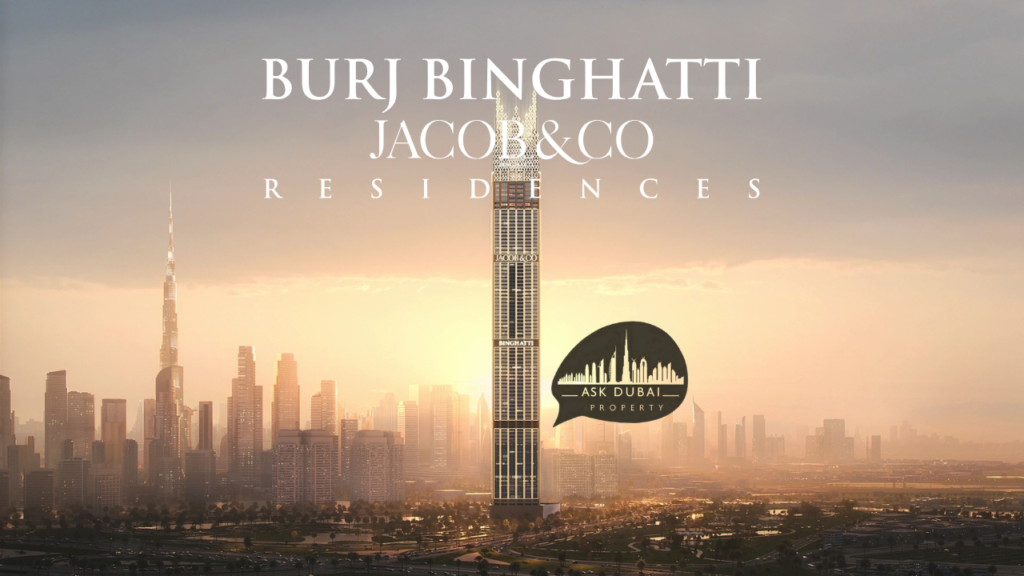
Burj Binghatti Jacob & Co Residences aims to become the world’s tallest residential structure upon completion in 2026. This 104-story skyscraper in Business Bay partners with luxury jeweler and watchmaker Jacob & Co., integrating a crown rich with diamond-shaped elements and interiors showcasing the brand’s signature opulence.
“Binghatti was the first to introduce these global brands to the real estate industry,” Muhammad explained. “The idea was to create something that would translate into an extension of the lifestyle that these brands have built in a way that had never been seen before.”
The strategy was brilliant in its simplicity: if someone could afford a $3 million Bugatti Chiron, they would certainly appreciate and pay a premium for a residence that embodied that same philosophy of uncompromising excellence.
The Numbers Tell a Story
By any measure, Muhammad’s transformation of Binghatti has been extraordinary. When he assumed leadership in 2014, the company had a portfolio worth AED 3.5 billion. By late 2024, that figure had surpassed AED 40 billion ($10.9 billion). The company now plans to expand its portfolio to AED 60 billion by the end of 2025.
Binghatti has delivered more than 12,000 residential units to date and completed 15,000 units in 2024 alone. The company’s portfolio now spans over 80 projects across prime Dubai locations including Business Bay, Al Jaddaf, Downtown Dubai, Dubai Silicon Oasis, Jumeirah Village Circle, Jumeirah Village Triangle, Liwan, and Dubai Residential Complex, with a total investment value exceeding DH 70 billion.
In 2024, Binghatti made financial history by launching its first US dollar-denominated sukuk offering with a competitive yield of 9.625%. Initially targeted at $300 million, the issuance attracted so much investor confidence that it eventually reached $621 million more than double the target. In August 2025, the company issued another USD 500 million sukuk, listed on both Nasdaq Dubai and the London Stock Exchange.
These financial instruments weren’t just fundraising mechanisms they were validation. International capital markets were betting on Muhammad’s vision. Fitch Ratings assigned Binghatti a credit rating of ‘BB-‘, while Moody’s granted ‘Ba3’, reflecting strong investor confidence and long-term stability for a private real estate developer.
In the first nine months of 2025 alone, Binghatti generated profits of AED 2.66 billion. The company achieved $5 billion in annual sales and, remarkably, sold more than 14,000 units year-to-date in 2025 claiming the number-one position in Dubai’s real estate market and surpassing both public and private competitors.
“As Dubai’s fastest-growing real estate player, Binghatti has now risen into the top three developers in the city, commanding a significant share of the market according to the latest Dubai Land Department figures,” Muhammad stated in December 2025. “These results reflect the strength of our strategy and the trust our clients place in our vision.”
Recognition and Rankings
The accolades have followed the achievements. In 2018, Muhammad won recognition as Most Influential Leader in Real Estate at the International Property Awards. In 2020, His Highness Sheikh Dr. Sultan bin Mohammed AlQasimi, Ruler of Sharjah and President of American University of Sharjah, inducted Muhammad into the AUS Alumni Wall of Fame an honor that came just five years after his graduation.
“It’s very humbling that after only a few years of leaving university, having given 110 percent in real-life experience, I received the AUS Alumni Wall of Fame award,” Muhammad reflected. “I’m very grateful.”
In April 2025, Forbes Middle East ranked Muhammad 8th on its list of the Middle East’s Most Impactful Real Estate Leaders 2025 a ranking compiled based on years of experience, the value of completed and ongoing projects, company financials, and the size of landbanks. The list placed him ahead of dozens of industry veterans, many of whom had been building developments before Muhammad was born.
Meanwhile, his father, Dr. Hussain Binghatti, was ranked 17th on Forbes’ 2025 list of the World’s Richest Arabs with a reported net worth of $2.5 billion, while the Binghatti family placed 19th on Forbes’ annual ranking of the Middle East’s Top 100 Arab Family Businesses.
On social media, Muhammad has built a powerful digital presence, with over 334,000 followers on LinkedIn and a steady +65% growth rate over three years. He ranks #3 on LinkedIn UAE and in the Top 10 for Business & Startups UAE, with a Favikon Authenticity Score of 80.5/100 reflecting genuine expertise and consistent growth.
Binghatti itself has earned numerous accolades: Gulf Real Estate’s Best Real Estate Off-Plan Project, MENA Green Building Awards in 2017 and 2018, Cityscape Awards in 2018, and Arabian Property Awards in 2017 and 2018.
The Philosophy of Relentless Obsession
Ask Muhammad about his success, and he doesn’t cite luck, timing, or even talent. He speaks instead of obsession a word most people use as criticism, but which Muhammad wears as a badge of honor.
“My first tip for entrepreneurs is finding something that you would not mind doing for the rest of your life,” Muhammad advises. “Once you find that thing, do it consistently and give it your 110% effort every day, because passion is never enough without consistent action.”
He continues: “I live and breathe the job that I do. That means if there ever is a vision or project, no matter how big or small, I approach it with an attitude of fixation and relentless obsession.”
In a recent viral TikTok interview with The School of Hard Knocks, Muhammad distilled his philosophy into actionable wisdom:
- Find work you’d do forever without burnout his drive stems from loving architecture as art and lifestyle, not just commerce.
- Deliver 110% daily passion alone fails without relentless action.
- Be “crazy” committed, rejecting average persevere through ten falls to rise on the eleventh.
- Early setbacks feel apocalyptic, but they’re steps to victory experiment boldly and learn from failure.
“Even in hindsight, I would not do things differently,” Muhammad stated in late 2024. “I believe greatness is greatness. There are many paths to it, but it’s one destination which I am pleased to say BinGhatti has achieved today.”
This philosophy extends beyond business into Muhammad’s personal identity. He describes himself not merely as an architect or CEO, but as “an artist and poet” someone who views real estate development not as a commercially driven exercise but as a creative act comparable to painting or sculpture.
“I believe that knowledge is the most valuable thing in life and that it should always be free,” Muhammad said when explaining why he regularly returns to CAAD to give workshops, serve as a jury member for final student presentations, and provide opportunities to interns and new graduates. “If I can give knowledge for free, that’s the most impactful thing I can do in life.”
The Future: Global Expansion and Smart Cities
Muhammad’s ambitions haven’t been satisfied by conquering Dubai. He plans to build Binghatti’s international presence by exporting the company’s distinct architectural vision to foreign markets worldwide. In 2025, Binghatti opened its first sales boutique in Riyadh, Saudi Arabia a strategic expansion into the Kingdom’s booming real estate market fueled by Vision 2030 and mega-projects like NEOM.
Technology also features prominently in Muhammad’s future plans. “One of the ideas we’ve been toying with is smart properties with integrated artificial intelligence to bring the buildings to life, and thereby interact with humans,” he revealed. The integration of automation and connectivity improvements remains a priority, as Muhammad seeks to elevate the living experience beyond what current technology offers.
Sustainability is another cornerstone. Binghatti’s 2025 projects incorporate energy-efficient designs, green spaces, and eco-friendly initiatives aligned with Dubai’s Net-Zero 2050 goals. Features such as photovoltaic panels and smart home technologies are integral to new developments, catering to environmentally conscious investors.
Muhammad aims to double the property portfolio within two years and increase the company’s value to AED 60 billion. But rather than pursuing peripheral developments, Binghatti focuses on major construction projects in the heart of Dubai premium locations where architectural statements matter most.
“I don’t consider Binghatti to be a property developer at all,” Muhammad insists. “Each building must have a much deeper relationship with its residents and tell a story about its purpose, so it elicits meaning.”
The Man Behind the Buildings
Despite his public profile and business success, Muhammad remains notably private about his personal life. Born and raised in Dubai, he belongs to a generation of Emiratis who witnessed their city’s transformation from regional trading hub to global metropolis a transformation his own work has helped accelerate.
He maintains strong ties with regional leaders, institutions, and investors who recognize his role in shaping Dubai’s skyline. His network reads like a who’s who of global business and luxury: partnerships with Bugatti and Mercedes-Benz, features in Forbes and Entrepreneur, and connections with government officials who see Binghatti’s success as validation of Dubai’s economic diversification strategy.
Yet those who work with Muhammad describe not arrogance but authenticity. His LinkedIn presence blends polished corporate updates with personal milestones tied to business achievements grounding luxury narratives in a human story. His Favikon authenticity analysis notes: “His authenticity shines through in posts that tie personal milestones to business achievements, grounding luxury narratives in a human story.”
A colleague’s LinkedIn recommendation captures this quality: “Muhammad BinGhatti is one of the most visionary, dedicated, creative, promising young business leaders I have ever known in Dubai. I have observed that Muhammad BinGhatti is an astute businessman who understands not only the financial aspects of operating successful business projects a true model promising young CEO.”
A Renaissance in Real Estate
In an industry often criticized for prioritizing profit over beauty, efficiency over emotion, Muhammad BinGhatti stands as an anomaly a developer who insists that real estate can be art, that buildings can tell stories, that commerce and creativity need not exist in opposition.
His journey from university student catching 4:00 a.m. deadlines to chairman of a multi-billion-dollar empire commanding the attention of global luxury brands represents more than personal success. It represents a philosophical shift in how we think about the spaces we inhabit.
“We’ve changed how people perceive real estate by introducing the idea of amalgamating art into properties,” Muhammad explains. “So, it’s not just about the property, it’s about selling a brand like you would in the automotive or fashion sector.”
This is Muhammad’s true achievement: not merely building towers that pierce Dubai’s sky, but creating a new language for luxury living one where architecture becomes identity, where residences embody the values of the world’s most prestigious brands, where the line between art and shelter dissolves entirely.
As 2025 draws to a close and Muhammad BinGhatti surveys a skyline increasingly defined by his vision, one thing becomes clear: the young man who once dreamed of seeing his photograph in newspapers has achieved far more. He’s ensured that anyone looking at Dubai’s horizon will see his name written in steel and glass a permanent signature on one of the world’s most ambitious cities.
The grandson of a nomadic Bedouin merchant has built monuments. But more than that, he’s built a legacy that proves what’s possible when artistic vision meets entrepreneurial audacity, when cultural heritage embraces technological future, when a young architect refuses to accept that buildings must be boring.
Muhammad BinGhatti didn’t just transform Binghatti. He transformed what it means to be a real estate developer in the 21st century. And if his past eleven years are any indication, he’s only just begun.
“When you are brought up that way, you understand that there’s no mercy in life and if you want to really go out there and achieve, you’ve got to do what it takes.”
Muhammad BinGhatti
About the Subject:
Muhammad BinGhatti is the Chairman and CEO of Binghatti Holding, one of the UAE’s fastest-growing real estate development companies. An architect by training, he graduated with honors from the American University of Sharjah in 2015 and assumed leadership of Binghatti in 2014. Under his direction, the company has grown from a AED 3.5 billion portfolio to over AED 70 billion, pioneering branded residences through partnerships with Bugatti, Mercedes-Benz, and Jacob & Co. In 2025, he was ranked 8th on Forbes Middle East’s list of Most Impactful Real Estate Leaders. He is based in Dubai, United Arab Emirates.